

If you're planning a new website, one of the first questions that comes up is simple: How long is this actually going to take?
The honest answer is that it depends. Some websites can be completed in just a few weeks, while others take several months. The difference comes down to planning, complexity, and how prepared you are before the project even begins. In this guide, we’ll walk through realistic timelines, what affects them, and how to avoid delays so your website launches on schedule.
The Short Answer
Most professional websites take between 4 and 8 weeks to complete. That said, this range assumes:
- A clear scope
- Timely communication
- Content is ready or being created efficiently
If any of those are missing, timelines can stretch quickly.
What Happens During a Website Build?
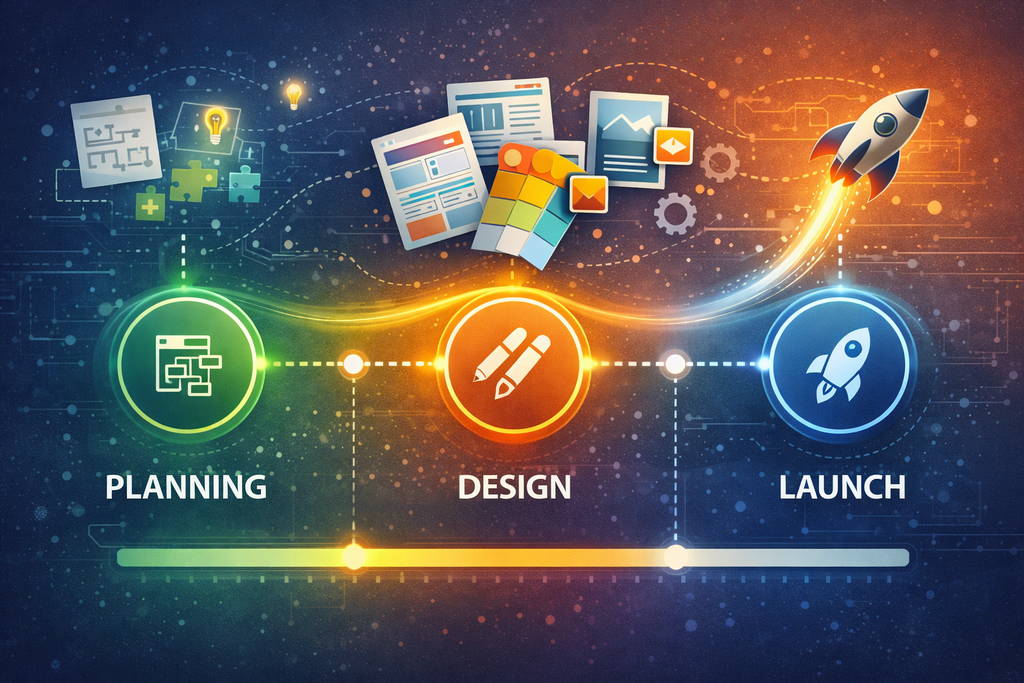
A website is not built all at once. It moves through a series of phases, each with its own timeline.
Planning and Strategy (1 to 2 weeks)
This is where everything starts. Before any design work begins, there needs to be a clear understanding of your goals, target audience, and structure of the site. This phase often includes sitemap planning, page outlines, and aligning on what the website needs to accomplish. Skipping or rushing this step is one of the biggest reasons projects run into problems later.
Design Phase (1 to 3 weeks)
Once the strategy is in place, the design process begins. This is where your website starts to take shape visually. Design is more than just how things look. It includes layout decisions, user experience, and how visitors will navigate the site. A well-thought-out design ensures your site not only looks professional but also guides users toward taking action.
Development Phase (1 to 3 weeks)
After design approval, the site moves into development. This is where everything gets built out on the actual platform. Pages are created, functionality is added, and the design is turned into a working website. If your site includes more advanced features like integrations or custom elements, this phase can take longer.
Content and SEO Integration (Ongoing)
Content is one of the most underestimated parts of a website timeline. If content is not ready, it can delay everything. On the other hand, when content and SEO are handled properly, your site is positioned to perform right out of the gate. This is where having a team that understands both design and digital marketing services can make a big difference.
Review and Launch (1 week)
Before going live, everything needs to be reviewed and tested. This includes:
- Checking mobile responsiveness
- Testing forms and functionality
- Final content edits
- Performance checks
Once everything is approved, the site is ready to launch.
What Can Slow Down a Website Project?
Even with a solid plan, delays can happen. In most cases, they come from a few common areas. One of the biggest is content. If text and images are not ready, the project often stalls. Another is unclear direction. When decisions take too long or change frequently, timelines stretch. Communication also plays a major role. Fast feedback keeps things moving, while delays in approvals can add weeks to a project. Working with a structured team that has a clear process, like what you’d expect from professional website design services, helps prevent many of these issues before they start.
Can a Website Be Built Faster?
Yes, but there are tradeoffs. A fast website build, sometimes in 2 to 3 weeks, is possible if:
- The project is small
- Content is fully ready
- The design is simple
However, faster timelines often mean less customization, less strategy, and fewer optimization steps. For businesses that rely on their website for leads, rushing the process usually is not worth it.
How to Keep Your Website Project on Schedule
If you want your website completed on time, there are a few things you can do that make a big difference. Start by preparing your content early. Even rough drafts help move things forward. Be responsive during the process so approvals do not slow things down. Most importantly, choose a team that has a clear and structured workflow. Looking at real examples of completed projects, like those in a client portfolio, can give you a better sense of how a well-run process works from start to finish.
How Timeline Connects to Cost
There is often a connection between how long a project takes and how much it costs. More complex websites take longer because they involve more design, development, and strategy. Simpler websites move faster because there are fewer moving parts. If you’re trying to understand how timeline and pricing work together, it helps to review a detailed breakdown like this guide on website cost in Austin.
Final Thoughts
Building a website is not something that happens overnight, and it shouldn’t. A well-built website takes time because it involves planning, design, development, and optimization working together. When done correctly, the result is a site that not only looks good but actually helps grow your business. If you're planning a new website or a website redesign and want a realistic timeline based on your goals, you can always contact our team to talk through your project.
Still have questions about website timelines? Here are some of the most common questions we hear:
FAQs
How long does it take to build a small business website?
Most small business websites take about 4 to 8 weeks to build, from planning to launch. That usually includes 1 to 2 weeks of planning, 1 to 3 weeks of design, 1 to 3 weeks of development, and about a week of review and testing before launch. Projects stay on the shorter end when the page list is clear, content is ready, and feedback comes back quickly. More pages, custom features, or waiting on content will push the timeline longer.
Why do some websites take months to build?
Larger or more complex websites take months because they involve more pages, custom features, and more people giving feedback. Online stores, sites with many service or location pages, booking systems, and integrations with other software all add planning, building, and testing time. The most common cause of delays is not the build itself but waiting on content, photos, approvals, and decisions. A clear scope and one decision maker on your side are the best ways to keep a bigger project moving.
Can a website be built in a week?
Yes, a very basic website can be built in a week, but it usually means trade-offs in customization, SEO, and quality. A one-week website is typically a template with a few pages, little keyword planning, and minimal testing on mobile devices. That can work as a short-term placeholder. For a business that relies on its website for leads, a few extra weeks for planning, custom design, and SEO setup leads to a much better result that will not need to be rebuilt soon after launch.
What is the fastest way to launch a website?
The fastest way to launch a website is to have your content ready, keep the first version focused, and give quick feedback. Gather your logo, photos, service descriptions, and contact details before the project starts, and decide who approves each step. Launch with the core pages first, then add extras like a blog or more service pages afterward. Working with a team that has a proven process also helps. At Austin Custom Web, AI-assisted design and development helps our team build websites faster and better without skipping quality checks.
Does SEO increase the timeline?
Yes, building SEO into a website adds a little time up front, but it saves far more time later. SEO during the build includes keyword planning, a logical page structure, optimized titles and headings, and speed tuning, so pages are created right the first time. Adding SEO after launch often means rewriting content and restructuring pages that are already live. Keep in mind that rankings take time to build after launch, since Google needs to crawl and index the new website.
How long does a website redesign take?
A website redesign usually takes about as long as a new build, because it goes through the same planning, design, development, and testing steps. Extra time goes into reviewing the current site, deciding what content to keep, and redirecting old URLs to their new pages so existing Google rankings are protected. Reusing strong existing content can speed things up, while a full content rewrite adds time. Our website redesign page explains how our team handles that process.